
Introduction
The Ebola Virus has become one of the most searched health topics again in 2026. Many people around the world are asking important questions about Ebola Virus Disease, how it spreads, and whether there are new outbreaks. Because of recent health alerts and public discussions online, Ebola is trending again on search engines and social media.
Ebola Virus Disease is a serious illness that affects humans and animals. It can spread quickly in some situations and may become deadly if medical care is delayed. However, modern healthcare systems, vaccines, and public awareness have improved greatly in recent years.
In this article, you will learn what Ebola Virus Disease is, its symptoms, causes, treatment options, prevention methods, and the latest global updates. This guide uses easy English so everyone can understand the topic clearly.
What Is Ebola Virus Disease?
Ebola Virus Disease, often called Ebola, is a rare but dangerous disease caused by the Ebola virus. The illness was first discovered in 1976 near the Ebola River in Africa, which is how it got its name.
The virus can affect the immune system and many organs in the body. Without quick treatment, Ebola can become very serious.
Health experts continue to monitor Ebola carefully because outbreaks can happen suddenly in some regions.
History of Ebola Virus
First Ebola Outbreak
The first known Ebola outbreaks happened in 1976 in Central Africa. Since then, several outbreaks have occurred over the years.
Major Global Attention
The Ebola outbreak between 2014 and 2016 became one of the largest in history. Countries such as Guinea, Liberia, and Sierra Leone were heavily affected. During that time, the world became more aware of the dangers of Ebola Virus Disease.
Modern Health Response
Today, governments and health organizations have better tools to control Ebola outbreaks. Vaccines, rapid testing, and emergency response systems help reduce the spread of the virus.
How Does Ebola Spread?
Understanding how Ebola spreads is very important.
Human-to-Human Transmission
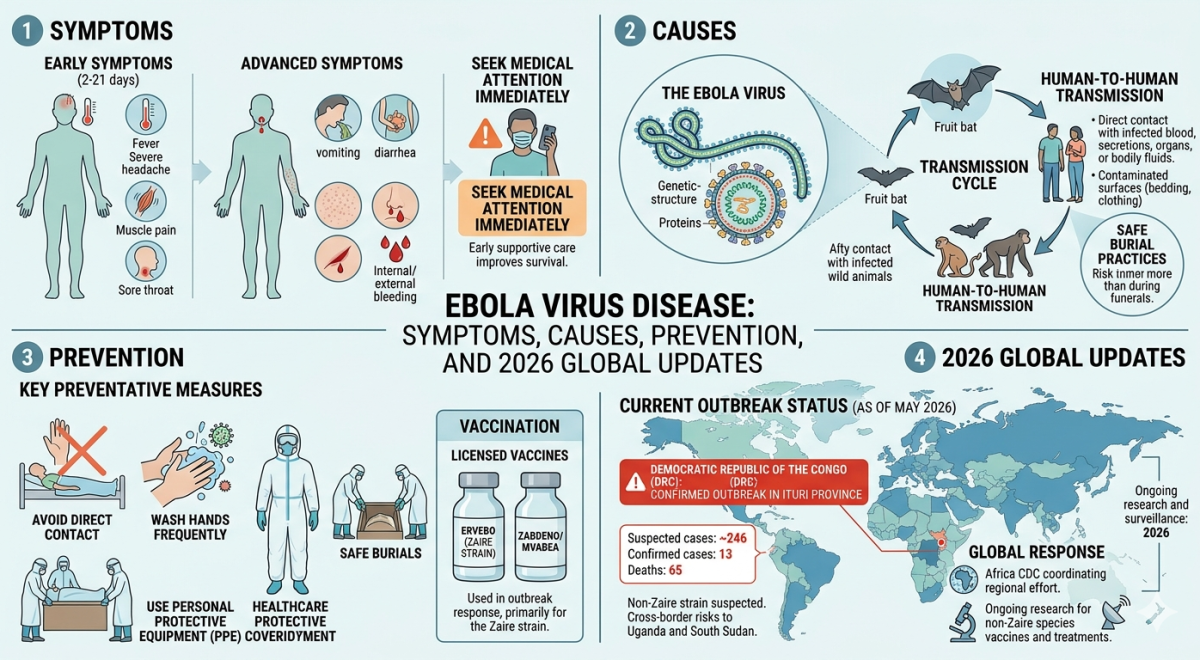
The Ebola Virus spreads through direct contact with:
- Blood
- Body fluids
- Vomit
- Sweat
- Saliva
- Contaminated objects
People can become infected when they touch infected fluids without protection.
Animal Transmission
Scientists believe Ebola originally came from infected wild animals. Certain animals may carry the virus and spread it to humans.
Ebola Does Not Spread Easily Through Air
Unlike some common respiratory viruses, Ebola is not mainly spread through normal air transmission. Direct contact is usually required.
Ebola Symptoms
Symptoms of Ebola Virus Disease may appear between 2 and 21 days after exposure.
Early Ebola Symptoms
The first signs often include:
- Fever
- Headache
- Muscle pain
- Weakness
- Sore throat
- Fatigue
These symptoms may look similar to common illnesses at first.
Severe Ebola Symptoms
As the disease progresses, symptoms can become more serious:
- Vomiting
- Diarrhea
- Stomach pain
- Skin rash
- Internal bleeding
- Difficulty breathing
Severe cases require immediate medical care.
Why Ebola Is Trending Again in 2026
Ebola has become a trending topic again because of increased online discussions, public health monitoring, and concerns about new outbreaks in some areas.
Social Media Attention
Many users on platforms like TikTok, X, Facebook, and YouTube are discussing Ebola-related health news. This increases public interest and search traffic.
Public Health Monitoring
Global health organizations continue to track Ebola cases closely. Whenever health alerts are announced, search trends usually increase quickly.
Increased Awareness
People today are more interested in global health issues after recent worldwide disease outbreaks. This has made Ebola-related searches more common.
Ebola Diagnosis
Doctors use laboratory testing to confirm Ebola Virus Disease.
Common Testing Methods
Health professionals may use:
- Blood tests
- PCR testing
- Virus detection technology
Testing is usually done in specialized medical laboratories.
Importance of Early Detection
Finding Ebola early can help improve treatment outcomes and reduce the spread to others.
Ebola Treatment
There is no simple home cure for Ebola Virus Disease. Patients need professional medical care.
Supportive Medical Care
Doctors often provide:
- Fluids and hydration
- Oxygen support
- Blood pressure monitoring
- Pain management
- Treatment for infections
New Medical Advances
Medical science has improved Ebola treatment in recent years. Some therapies and vaccines have helped reduce deaths during outbreaks.
Ebola Vaccines
Development of Vaccines
Scientists developed Ebola vaccines to help prevent serious outbreaks. Vaccination programs have been used in some affected areas successfully.
Importance of Vaccination
Vaccines help healthcare workers and communities reduce the risk of infection.
How To Prevent Ebola
Prevention is one of the best ways to stay safe.
Avoid Direct Contact
Avoid touching blood or body fluids from infected individuals.
Practice Good Hygiene
Wash hands regularly using soap and clean water.
Follow Health Guidelines
Always follow advice from healthcare professionals and public health organizations.
Safe Medical Practices
Healthcare workers use protective equipment to reduce infection risk.
Global Health Organizations Fighting Ebola
Many organizations work together to control Ebola outbreaks.
World Health Organization
The World Health Organization plays a major role in monitoring outbreaks and supporting affected countries.
Medical Research Teams
Scientists worldwide continue studying the Ebola Virus to improve vaccines and treatments.
Myths About Ebola
There are many myths online about Ebola Virus Disease. It is important to trust reliable information.
Myth 1: Ebola Spreads Everywhere Instantly
Ebola usually requires direct contact for transmission.
Myth 2: Every Ebola Case Is Fatal
Many people survive Ebola with proper medical treatment.
Myth 3: Ebola Is Only a Historical Disease
Ebola still exists and continues to be monitored globally.
Impact of Ebola on Society
Ebola outbreaks can affect many parts of society.
Healthcare Systems
Hospitals and clinics may become overwhelmed during outbreaks.
Economic Effects
Travel, trade, and businesses can be affected when outbreaks occur.
Mental Health Concerns
Fear and misinformation may increase stress and anxiety among communities.
Ebola and Media Coverage
News websites and social media often increase coverage when Ebola-related health alerts appear. This causes spikes in Google searches and trending discussions.
Responsible journalism and accurate public information are important during health events.
The Future of Ebola Research
Scientists continue working on:
- Better vaccines
- Faster testing
- Improved treatments
- Outbreak prevention systems
Medical technology today is much more advanced than during earlier Ebola outbreaks.
FAQ Section
What causes Ebola Virus Disease?
Ebola Virus Disease is caused by infection with the Ebola virus.
Is Ebola contagious?
Yes. Ebola can spread through direct contact with infected body fluids.
Can Ebola be treated?
Patients can recover with proper medical care and supportive treatment.
Is there a vaccine for Ebola?
Yes. Vaccines have been developed and used in some outbreak areas.
Where did Ebola start?
The first recognized outbreaks were reported in Central Africa in 1976.
Why is Ebola trending again?
Health discussions, online news, and public concern about outbreaks have increased interest in Ebola in 2026.
Conclusion
Ebola Virus Disease remains an important global health topic in 2026. While Ebola can be dangerous, medical science and public awareness have improved greatly over the years.
Understanding Ebola symptoms, causes, prevention, and treatment can help people stay informed and safe. Health organizations continue monitoring outbreaks carefully, while researchers work on better vaccines and treatments.
As Ebola trends again online, it is important to rely on trusted health information instead of rumors or misinformation. Public education and fast medical response remain key tools in controlling Ebola Virus Disease.